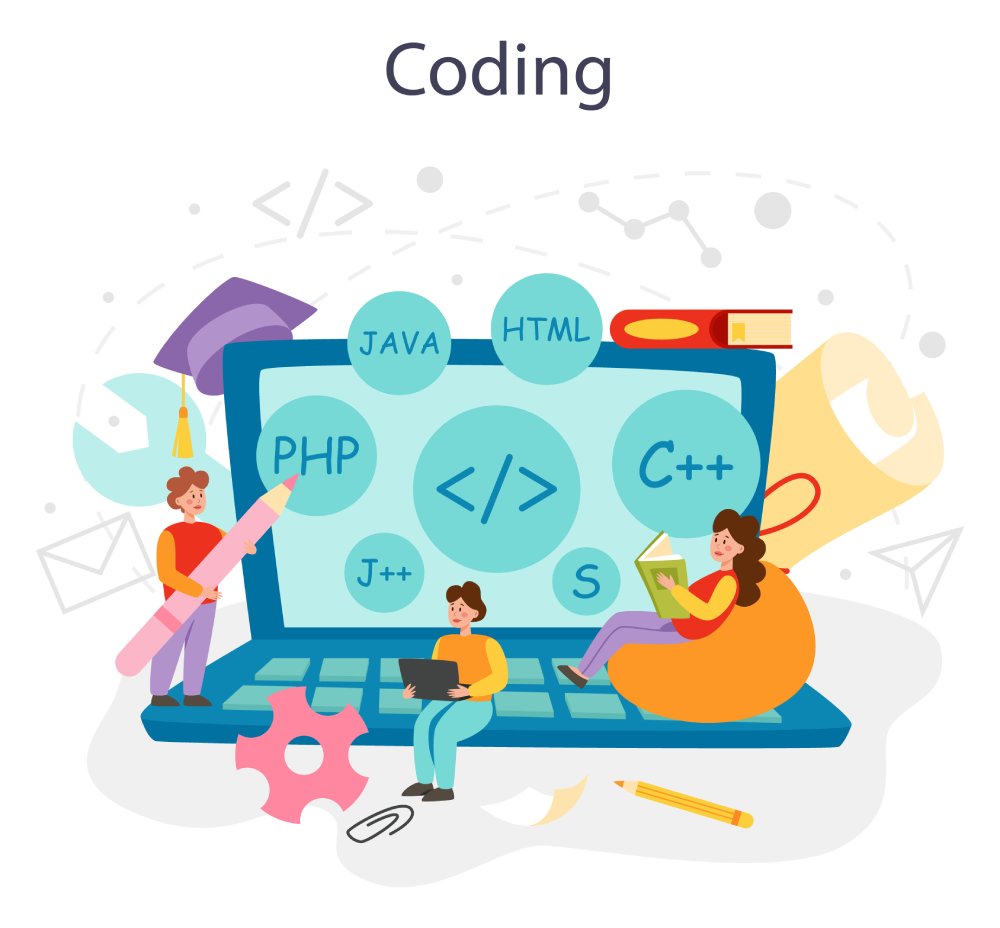
Confused by names like Python, JavaScript, PHP, Java, or React? This simple, human guide explains which coding language fits which kind of app, and what questions a non-technical person should ask their developer before starting a project.
Feel Lost When Developers Start Speaking “Tech”? You’re Not Alone.
Ever sat in a meeting where your developer said something like, “We should use React on the frontend, Node on the backend, maybe a little Python for the ML layer”… and you just nodded politely while your brain quietly left the room?
If that sounds familiar, this guide is for you. No jargon. No ego. Just plain language.
By the end, you will:
- Understand the basic idea of popular coding languages
- Know which language suits which type of app
- Learn what questions to ask your service provider so you do not get blindly sold into the wrong stack
First Things First: What Is a “Coding Language” Really?
Think of coding languages like human languages.
- English, Hindi, Spanish = different ways for humans to talk to each other
- Python, JavaScript, PHP, Java, C# = different ways for humans to talk to computers
Each language has its own style, strengths, and ideal use cases. Just like you would not write a Bollywood screenplay in formal legal English, you would not build a high-frequency trading system in a slow scripting language.
You don’t need to know how to write the language. But it really helps if you know which language belongs to which kind of work.
Meet the Main Characters (Popular Languages Explained Simply)
1. JavaScript – The “Front-of-House” Magician
Where it lives: The browser (Chrome, Safari, Firefox) and often the backend too (via Node.js).
What it is great for: Anything you see and interact with on a website.
- Buttons that change when you click
- Animations, sliders, popups
- Single Page Apps (like dashboards, admin panels)
Commonly used for:
- Modern websites and web apps
- Interactive dashboards
- Hybrid mobile apps (React Native, Ionic, etc.)
As a layman, think of JavaScript as: The “front-of-house” staff in a restaurant – the part the customer actually sees and interacts with.
2. PHP – The Tried-and-Tested Workhorse
Where it lives: On the server (backend).
What it is great for: Traditional websites, content management systems, e‑commerce.
- WordPress (blogs, corporate sites)
- WooCommerce (online stores)
- Custom CRMs, booking systems, portals
Why developers still love it:
- Fast to develop in
- Huge ecosystem (plugins, libraries)
- Cheap hosting and easy deployment
As a layman, think of PHP as: The reliable “old-school” accountant who might not be flashy, but never misses a Tally entry.
3. Python – The Smart Kid (Data, AI, Automation)
Where it lives: Backend, scripts, data pipelines.
What it is great for:
- Data analysis and dashboards
- Machine learning and AI
- Automation scripts (e.g., daily reports, data cleaning)
Typical use cases:
- Recommendation engines (“People who bought this also bought…”)
- Fraud detection, scoring systems
- Chatbots and AI integrations
As a layman, think of Python as: The data scientist or analyst in your team – not doing the front-end decor, but making smart decisions behind the scenes.
4. Java / Kotlin – The Enterprise and Android Builders
Where they live: Backend servers, Android apps.
Java is great for:
- Banking systems
- Large enterprise software
- High-performance backend systems
Kotlin is great for:
- Modern Android apps (Google’s recommended choice)
As a layman, think of Java/Kotlin as: The heavy-duty machinery – made for big, robust, large-scale systems, especially in corporate and finance.
5. Swift – The iPhone Specialist
Where it lives: iOS and iPadOS apps.
What it is great for:
- iPhone and iPad apps
- High-quality, smooth Apple experiences
As a layman, think of Swift as: The language you almost always use if you want a serious iPhone app.
6. C# (.NET) – Corporate-Friendly All-Rounder
Where it lives: Windows apps, enterprise systems, some web apps.
What it is great for:
- Enterprise portals
- Internal company tools
- Windows desktop applications
As a layman, think of C# as: The suited-up corporate consultant – very comfortable inside large organisations and enterprise IT setups.
Okay, But Which Language for Which Type of App?
Here is a simple mapping you can actually use in conversations:
1. Simple Company Website (Services, About Us, Contact)
- Good choices: PHP (WordPress), JavaScript (Next.js, static site generators)
- What to tell your developer: “I don’t need fancy tech. I need something reliable, easy to update, and SEO-friendly.”
2. Blog or Content-Heavy Site
- Good choices: PHP (WordPress), headless CMS with JavaScript frontend
- Ask: “Can I update content myself without calling you every time?”
3. E-commerce Website (Online Store)
- Good choices:
- Shopify (hosted platform, less coding, faster launch)
- PHP (WooCommerce, custom cart)
- JavaScript front-end + any backend (for custom stores)
- Ask: “Are you using a standard platform (like Shopify/WooCommerce), or building everything from scratch? Why?”
4. Web App / Dashboard / SAAS
- Good choices: JavaScript (React, Vue, Angular) + Node.js / PHP / Python on backend
- Ask:
- “How easy will it be to add new features later?”
- “Is the technology you are picking common enough so that another developer can take over if needed?”
5. Android Mobile App
- Good choices: Kotlin, Java, or cross‑platform (React Native, Flutter)
- Ask: “Are you building native (Kotlin/Java) or cross‑platform? What are the trade-offs for my app?”
6. iOS (iPhone) Mobile App
- Good choices: Swift (native), or cross‑platform (React Native, Flutter)
- Ask: “Will the app feel truly ‘iOS native’ or shared with Android using one codebase?”
7. Data, Analytics, AI, Automation
- Good choices: Python (almost always), sometimes R
- Ask: “How will the data be stored, and how can I see simple reports without learning code?”
As a Non-Technical Founder/Client, What Should You Ask?
You do not need to know the right answer. You just need to ask the right questions.
Question 1: “Why are you recommending this language/stack for my project?”
A good developer should explain in simple terms:
- How it fits your use case
- How it impacts cost and timeline
- What the long‑term pros and cons are
Red flag: If the answer is basically “Because I like it” with no connection to your business needs.
Question 2: “Is this technology common or very niche?”
You want something that:
- Many developers know (so you are not stuck with just one person)
- Has good community support and documentation
Safe, common options: PHP, JavaScript, Python, Java, Kotlin, Swift.
Question 3: “How easy will it be to maintain and update later?”
New features, bug fixes, design tweaks – these will happen. Ask:
- “If you disappear, can another developer easily understand and work on this?”
- “Are you following standard frameworks or highly custom stuff only you know?”
Question 4: “Will this choice impact speed and scalability?”
Ask in plain English:
- “If I go from 100 users to 10,000 users, will this technology hold up?”
- “What would we need to change if the app really takes off?”
You do not need hardcore tech detail – just a clear picture of whether what they are building is future-proof enough for your goals.
Question 5: “What’s the balance between ‘fancy’ and ‘practical’?”
Developers sometimes love shiny new tech. You probably care more about:
- Stability
- Ease of hiring
- Speed to market
So ask:
- “Are we picking this because it is best for my business, or because it is new and cool?”
Simple Cheat Sheet (You Can Save This)
- Corporate website / blog: PHP (WordPress) or simple JS‑based site
- E‑commerce: Shopify, WooCommerce (PHP), or custom JS + backend
- Web app / dashboard: JavaScript frontend + Node/PHP/Python backend
- Android app: Kotlin or React Native
- iOS app: Swift or React Native
- Data / AI / automation: Python
You don’t have to force a specific language on your developer. Instead, use this to sanity-check what they propose.
Final Thought: Your Job Is Not to Code. It Is to Ask Better Questions.
As a business owner, founder, or manager, your job is not to become a programmer.
Your job is to:
- Understand the high-level trade-offs
- Ask clear questions
- Make sure the tech decisions align with your business goals
So next time a developer throws three frameworks and five languages at you, you can smile and say:
“Okay, sounds good. But walk me through why this is the right choice for my kind of app, how it affects cost, and how easy it will be to maintain later.”
Now you are not a silent spectator. You are an informed decision-maker.
And that is exactly where you should be.
Content Disclaimer
While we strive to provide accurate, up-to-date, and reliable information, VoroHQ makes no representations or warranties of any kind, express or implied, about the completeness, accuracy, reliability, suitability, or availability of the information contained in this article.
The content is provided for general informational and educational purposes only and should not be considered as professional, legal, financial, or technical advice. We recommend independently verifying all information before making business decisions or taking action based on this content.
Pricing, features, statistics, and other details mentioned are accurate as of the publication date (December 9, 2025) and may have changed since. Always refer to official sources for the most current information.
Found an error or outdated information?
We appreciate your feedback and take content accuracy seriously. Please report any inaccuracies to legal@vorohq.com. While we make every effort to review and correct reported issues promptly, no compensation or liability is applicable for content errors or omissions.
Join the Conversation
Have thoughts on this article? We'd love to hear from you!
Share Your Thoughts